Protecting People and Safety Amidst Corrections Workforce Gap
March 04, 2026 by Mandye Robinson
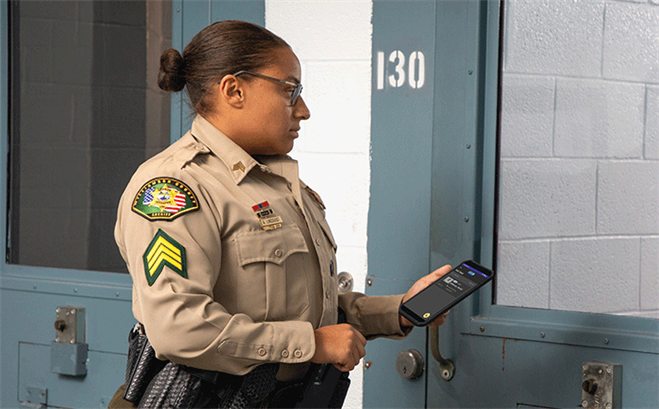
The cornerstone of the corrections system is its workforce. Dedicated staff are essential for ensuring effective population management and reducing recidivism.
Yet, it is widely recognized that the role of a correctional officer (CO) is incredibly taxing. COs are held to a high standard of running a tight ship in a very unpredictable environment.
They must maintain composure and professionalism, upholding security and safety with on-your-feet thinking, and establishing control while also demonstrating empathy.
All this high-stakes responsibility despite fluctuating resources.
Noted in a 2024 survey from the American Correctional Association Research Council, officer vacancy rates reached an alarming 55%, while turnover rates were as high as 48%. Combining these vacancies with the nearly 2 million people held in prisons and nearly 7 million people admitted to county jails every year, the ratio of those behind bars to those managing this massive population is becoming increasingly skewed. This disparity presents growing security risks, administrative burdens, and budget concerns — all of which exacerbate the consistent pressure of the job itself.
However, waiting for a grand return of CO applicants will likely be a revolving door, much like officer retention, which typically lasts three years before officers depart from the demands of the job. These CO staffing patterns are not a predicament of being understaffed. It is simply our reality.
Technology That Creates a Safer, More Efficient Workplace for Correctional Officers
COs face dozens of reasons to leave the profession, and yet very few reasons to stay. Common strategies for attracting and retaining correctional staff include competitive compensation, mental health support, and continuous training.
At Tyler, our mission is to improve the work environment with tools that simplify and standardize job routines — with a focus on people, not paperwork.
Now, it’s not just about moving people through the system. It’s about providing human services, protecting the livelihoods of people (both those serving our communities and serving time), and ensuring every interaction within the justice system is safe, error-free, and efficient.
With technology that works for local government, local government can work for people —preserving public trust and fostering commitment to stronger communities.
Paper-Free Inmate Management — Intake Through Release
Imagine an arresting officer arriving at the facility with handwritten arrest notes. The officer was distracted or in a hurry, making the handwriting hard to read. Booking staff ask clarifying questions before manually entering demographic and charge data in the system, not only prolonging the already lengthy intake process but also increasing the potential for errors.
What’s often overlooked is that inmate management begins before the individual ever sets foot in the facility.
When prebooking data from arresting officers in the field syncs to the jail management system (JMS) upon arrival, booking officers can immediately begin processing without the need for extra rekeying. This efficiency allows staff to complete more bookings in less time, which in turn helps arresting officers quickly return to the field where they’re needed most.
Streamlining the intake process sets the tone for incarceration — one that means business and order. Establishing this culture early with newly detained individuals helps protect the integrity of a safe and controlled system.
For a proactive view of ongoing operations, staff can make decisions with people and safety in mind with access to bed availability, inmate locations and schedules, security threat designations, keep separates, and gang associations.
And when it’s time for release, facilities can mitigate the risk of misidentifying someone using one-click, biometric facial recognition, which accurately matches the right individual to the right record at the right time. With 99.99% accuracy, staff can approach these security situations with higher confidence.
On-the-Go and Compliant Security Rounds
A correctional officer’s real work — the work focused on people — is not at their desk. Their real work involves moving around the facility to observe and maintain order with the population, facilitate inmate movement for meals or classes, and perform security checks to confirm the presence and well-being of inmates. In many states, security checks for at-risk individuals must occur as frequently as every 15 minutes.
As COs complete round after round, documenting dozens of observations, movements, and activities on paper logs, maintaining the integrity of this essential process can be challenging. While their responsibilities require continuous presence and active supervision throughout the facility, the need for manual data entry often ties them to their desk and pulls them away from operational priorities.
To better protect an officer’s time without sacrificing security standards, many facilities have digitized and automated the cell check process using mobile corrections technology. By bringing features of the JMS with them to complete rounds, officers scan near-field communication (NFC) tags at cells or blocks and use biometric facial recognition to log locations, movements, and activities. This results in a fully digital, compliant audit trail for all inmate events that sync back to the record. As legacy paper processes are eliminated, the focus shifts to prioritizing safety and human-centered operations.
Digital-First and Inmate-Led Experiences
Inmates rely on staff to input their grievances into the system. However, in overcrowded jails and prisons, the stack of grievances grows while the workforce that processes them shrinks. This often makes it difficult for officers to keep up, leading to delays in care for health service requests or other concerns that could compromise inmate or facility safety.
Granting access to grievance services via tablets and kiosks enables timelier attention and a degree of inmate autonomy. This digital paper trail, complete with layers of approval, helps ensure no individual or request falls through the cracks. It prioritizes safety from start to finish.
A Corrections Experience That Puts People First
Our goal is simple: make technology work for you, so you can work for people. Because at the end of the day, corrections is a people business, and the way people are managed directly impacts the outcomes. It’s about building a foundational commitment to the people who protect our communities every day while prioritizing the safety and support of the incarcerated population.
About the Author

Mandye Robinson
Mandye is the general manager of our Enterprise Corrections application suite. She joined Tyler Technologies in 2009 after working as a dispatcher, law enforcement officer, and investigator in the north Texas area. She has held a variety of positions throughout her Tyler career, including solution consultant for Tyler's Public Safety and municipal court products, head of Product Marketing for all of Tyler, and general manager for a Public Safety business unit.